
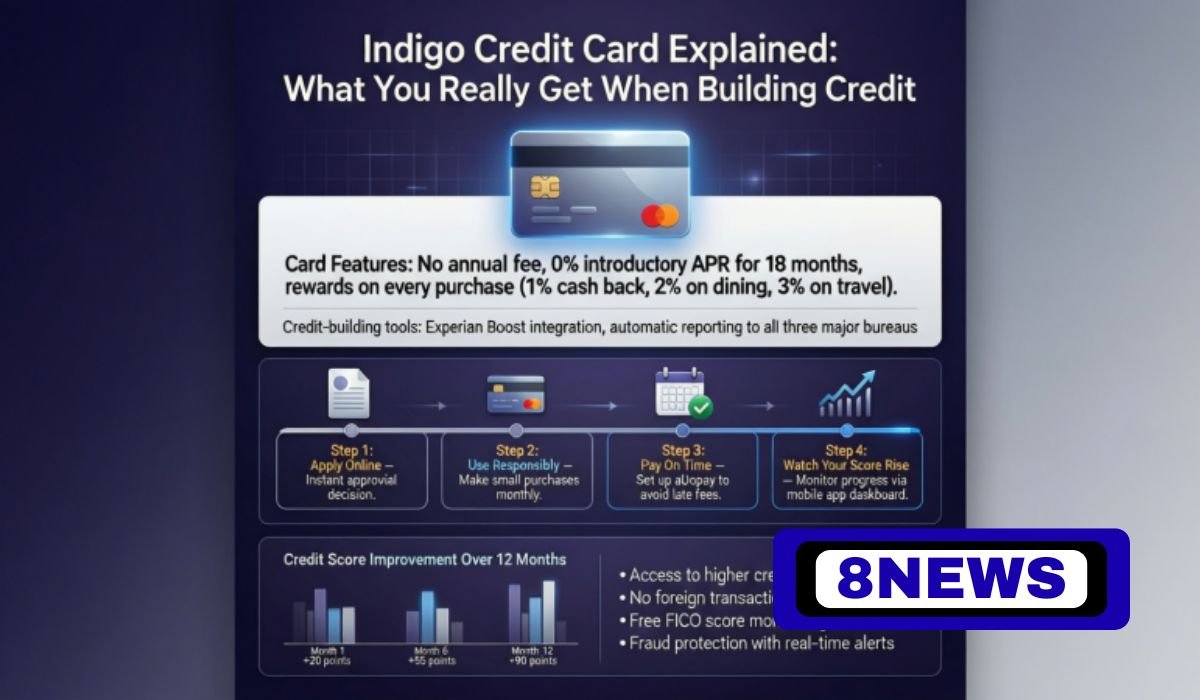
When you’re trying to build or rebuild your credit, finding the right credit card can feel like navigating a minefield. The Indigo Credit Card often shows up as a potential option—especially if your credit score is low or you’ve dealt with financial setbacks like bankruptcy. It promises access with few barriers, but what do you actually get when you sign up?
In this detailed guide, we’ll walk through everything you need to know about the Indigo Credit Card—what it offers, what it doesn’t, and whether it’s really worth it in 2025. From its fees to its credit-building potential, we’ll break down all the details so you can make a fully informed decision before you apply.
Quick Bio Information
| Feature | Details |
|---|---|
| Card Name | Indigo® Mastercard® |
| Issuing Bank | Celtic Bank |
| Card Type | Unsecured Credit Card |
| Annual Fee | $0 to $175 (then $49+) |
| Monthly Fee | Up to $19.25 (based on profile) |
| APR (Variable) | 24.90% – 35.90% |
| Credit Limit | $300 to $1,500 (not guaranteed) |
| Security Deposit | None required |
| Rewards Program | None |
| Credit Bureau Reporting | Equifax, Experian, TransUnion |
| Recommended For | Poor to Fair Credit / Rebuilding |
Why The Indigo Credit Card Gets So Much Attention
The Indigo Credit Card frequently appears in search results for people with poor credit or no credit history. Its main appeal lies in the fact that it’s unsecured—you don’t need to put down a deposit like you would with a secured credit card. It also promises fast approval and credit bureau reporting, which sound like great tools for someone trying to rebuild their financial life. But beneath the surface, the card has several issues that potential applicants should understand before applying.
What Is The Indigo Credit Card And Who Is It For
The Indigo Credit Card is marketed specifically for people with low credit scores, limited credit history, or even recent bankruptcies. Unlike secured cards that require a refundable deposit as collateral, the Indigo card is unsecured, meaning you don’t need to put any money down to get started. This can sound like a relief, but it also means the bank takes on more risk—and makes up for it through high fees and interest rates.
It’s meant for people who have trouble qualifying for other credit cards, and it’s available even if your credit history includes missed payments or collections. But the ease of access comes at a steep price.
How The Indigo Credit Card Works Step By Step
Applying for the Indigo Credit Card starts with a prequalification process that uses a soft credit check, meaning it won’t impact your score if you’re denied. If you’re pre-approved, you’ll receive a formal offer and must submit a full application, at which point a hard inquiry may appear on your credit report.
Once approved, the card comes with a modest credit limit—often $300 to start—and potentially hefty fees, depending on your creditworthiness. You’ll need to make on-time payments to avoid late fees, which can be as high as $41, and interest charges will apply immediately if you carry a balance. Payments can also take several days to post, which users have flagged as a major inconvenience.
Does The Indigo Credit Card Actually Help Build Credit
In theory, yes—the Indigo Credit Card reports to all three major credit bureaus, so if you use the card responsibly, it can help improve your credit score over time. Timely payments, keeping your balance low, and not maxing out your limit can all contribute to positive credit-building activity.
But there’s a big catch: the low credit limit and high fees can work against you. If your limit is only $300 and you’re charged a $175 annual fee plus possible monthly fees, your credit utilization ratio can skyrocket even before you start using the card. That can harm your score, especially if you don’t pay off the balance quickly.
Understanding The Fees: What You Really Pay
The Indigo Credit Card stands out for its complicated and unpredictable fee structure. The annual fee alone can be anywhere from $0 to $175 for the first year, then range from $35 to $99 or higher in subsequent years. Some cardholders also pay monthly fees of up to $19.25, even after paying an annual fee.
And here’s the real issue: you don’t find out your fee tier until after you’re approved. That lack of transparency means many users are surprised by how much the card actually costs to maintain. Compared to other credit-building cards with $0 fees, the Indigo card becomes an expensive gamble with few upsides.
What About Interest Rates And Carrying A Balance
If you carry a balance, expect to pay dearly. The Indigo Credit Card’s APR ranges from 24.90% to 35.90%, depending on your credit profile. That’s well above the average for subprime credit cards and can quickly add up if you don’t pay your bill in full each month.
There is no introductory 0% APR period, and no grace period for some fees. That means the moment you carry a balance, interest kicks in. If you’re using the card simply to make small purchases and pay them off monthly, you might manage the cost—but otherwise, the interest could eat away any progress you make on your credit score.
How Much Credit Limit You Can Expect
Most cardholders are approved with a starting credit limit of $300 to $500, and it rarely goes higher unless you prove yourself over time. Even then, limit increases are infrequent and not guaranteed. In fact, some users have reported no increase even after a year of responsible usage.
To make things worse, a portion of your credit limit might be held temporarily, especially after payments, making less of your limit available to you. Some cardholders report 14-day holds on available credit, which can be extremely frustrating if you need to make urgent purchases.
The Real User Experience: What Cardholders Say
Online forums like Reddit are full of reviews calling the Indigo Credit Card “the worst” or “a last resort.” Several users have complained about delayed payment postings, account holds, poor customer service, and fees being charged even after closing the card. Others warn that closing the card doesn’t always stop the monthly fees from accruing unless the balance is completely $0 and the account is officially marked closed.
The card’s customer service has also been criticized for being slow to respond or unhelpful in resolving issues. These real-world experiences show a pattern of dissatisfaction and confusion—things you don’t want when trying to rebuild your financial stability.
How The Indigo Credit Card Compares To Better Options
There are much better credit-building alternatives out there. The Discover it® Secured Credit Card offers cash back, no annual fee, and automatic review for upgrade after seven months—all in exchange for a $200 refundable deposit. The Capital One Platinum Secured Card allows you to qualify for a card with just a $49 deposit, with no annual fee and regular credit line reviews.
Even the OpenSky Secured Credit Card, which doesn’t require a credit check, has a flat $35 annual fee and fewer long-term costs than Indigo. These options offer real benefits without nickel-and-diming users.
Who Might Still Consider The Indigo Credit Card
The Indigo Credit Card may still make sense in very specific situations—like if you’ve been rejected by every other issuer, can’t afford a deposit, and urgently need to open a line of credit for reporting purposes. If you’re recovering from a recent bankruptcy or have no financial flexibility for secured cards, Indigo might be a temporary stepping stone.
But this card should be a last resort, not your first choice. If you can qualify for any other card—or can afford a small security deposit—you’ll likely get far more value elsewhere.
Better Ways To Build Credit In 2025
In today’s credit market, there are smarter ways to build credit. Consider signing up for Experian Boost to add utility payments to your credit history. Use secured cards with no annual fee, or get added as an authorized user on someone else’s credit card. You can also explore credit builder loans, which are offered by many credit unions and help you save while improving your credit profile.
The bottom line is: you don’t need to overpay to build your credit. With just a bit of research and patience, you can find a credit product that helps you move forward—without dragging you down with fees and headaches.
Final Thoughts
The Indigo Credit Card may seem like an easy fix for your credit problems, but it’s really just a costly detour for most people. Between the unpredictable fees, low credit limits, and poor user experience, it often does more harm than good. While it does report to all three credit bureaus and doesn’t require a deposit, the long-term costs far outweigh the short-term convenience.
In 2025, there are better tools, smarter cards, and more transparent credit-building options available. If you’re serious about improving your financial health, skip the Indigo Credit Card and explore the many alternatives that offer real benefits without the hidden costs.
FAQs About Indigo Credit Card
Is The Indigo Credit Card Legit?
Yes, the Indigo Credit Card is issued by Celtic Bank, a real financial institution. However, many users report frustrating customer service and unclear fee structures.
Does The Indigo Credit Card Require A Deposit?
No, it’s an unsecured credit card, so you don’t need to pay a deposit upfront.
How Much Is The Indigo Credit Card Annual Fee?
The annual fee varies between $0 and $175 in the first year and can be as high as $99 or more in following years.
Can You Increase Your Credit Limit With Indigo?
Some users may qualify for a credit limit increase, but reports suggest that increases are rare and not promised.
Is The Indigo Card Good For Building Credit?
It reports to all three major credit bureaus, so it can help build credit if used responsibly. However, the high fees can work against you.
How Long Does It Take To Get Approved?
Most applicants get a decision within minutes after applying online, though some may take longer if further review is needed.
What Is The Customer Service Number For Indigo?
The Indigo Credit Card customer service number is 800-353-5920, managed by Concora Credit.
People Also Read: Clogs Explained: Why This Comfortable Shoe Is Back in Style