
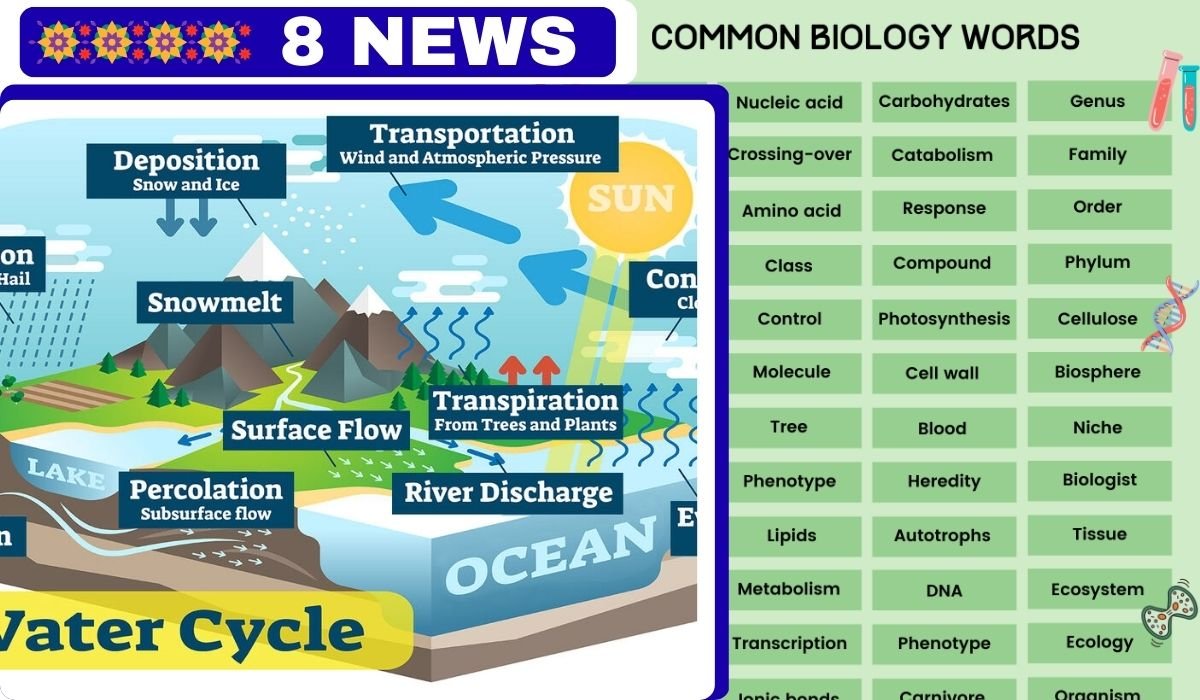
Introduction: Understanding the Language of Biology
Biology Is Everywhere. From The Food We Eat To The Air We Breathe, Life Around Us Follows Rules And Patterns That Science Has Been Exploring For Centuries. To Understand These Patterns, It Helps To Learn The Language Of Biology. Biology Terminology May Sound Complex At First, But Breaking It Down Into Simple, Clear Explanations Can Make It Easy And Even Fun To Learn. This Guide Will Walk You Through The Most Important Terms And Concepts, Helping You Build A Solid Foundation That Can Make Studying Biology, Understanding Nature, And Appreciating Life More Enjoyable And Meaningful.
Quick Bio Information
Cell Is The Smallest Unit Of Life
DNA Contains Genetic Instructions For Growth And Development
Gene Determines A Specific Trait In An Organism
Chromosome Carries Genes In Organisms
Allele Is A Variant Of A Gene
Protein Builds And Repairs Body Tissues
Enzyme Catalyzes Biochemical Reactions
Ovum Is The Female Gamete
Sperm Is The Male Gamete
Zygote Forms After Fertilization
Embryo Develops Into A Foetus In Mammals
Photosynthesis Converts Light Into Energy
Transpiration Releases Water From Plants
Ecosystem Includes Living And Non-Living Components
Mutation Introduces Genetic Variation
Predator Hunts Other Animals For Food
Parasite Lives Off A Host, Often Harming It
Symbiosis Is A Mutual Relationship Between Species
Metabolism Refers To All Chemical Processes In Life
Respiration Releases Energy From Food
Cells: The Building Blocks of Life
At The Heart Of Biology Are Cells, The Fundamental Units Of All Living Things. Each Cell Functions Like A Tiny Factory, Containing A Nucleus, Cytoplasm, And Various Organelles That Carry Out Specific Tasks. The Nucleus Stores DNA, The Instruction Manual Of Life, While Organelles Like Mitochondria Generate Energy, And Ribosomes Produce Proteins. Cells Come In Many Shapes And Sizes, And Plants And Animals Have Unique Features. Plant Cells, For Example, Have A Cell Wall And Chloroplasts, Which Allow Them To Make Food Through Photosynthesis, While Animal Cells Have Specialized Structures That Support Movement And Sensory Functions. Understanding Cells And Their Components Is Key To Grasping Most Biology Terminology.
Genetics: Genes, Chromosomes, and Heredity
Genetics Is The Study Of How Traits Are Passed From One Generation To The Next. Terms Like Gene, Allele, Chromosome, DNA, And RNA Are Central Here. A Gene Is A Segment Of DNA That Controls A Specific Trait, And Different Versions Of A Gene, Called Alleles, Determine Variations Such As Eye Color Or Blood Type. Chromosomes Carry These Genes And Ensure They Are Transmitted Correctly During Reproduction. Dominant And Recessive Alleles Influence Which Traits Appear, While Mutations Introduce Variations That Can Drive Evolution. Understanding Genetics Helps Explain Not Only Human Inheritance But Also How Plants And Animals Adapt And Thrive In Their Environments.
Reproduction and Development
Reproduction Is How Life Continues. Sexual Reproduction Involves The Fusion Of Male And Female Gametes—Sperm And Ovum—To Form A Zygote. This Zygote Develops Into An Embryo And Eventually A Foetus In Mammals, Growing Through Gestation Until Birth. Asexual Reproduction, On The Other Hand, Does Not Require Gametes And Includes Processes Like Budding, Binary Fission, And Vegetative Propagation In Plants. Understanding These Terms And Processes Helps Clarify How Different Organisms Multiply And How Traits Are Passed Along. Plant Reproduction Includes Germination, Pollination, And Seed Formation, Showing A Wide Diversity In Nature’s Strategies To Maintain Life.
Human Body Systems Made Simple
The Human Body Is A Complex Network Of Systems That Work Together To Keep Us Alive. The Circulatory System Transports Blood, Oxygen, And Nutrients To Every Cell. Muscles And Bones Enable Movement And Protect Vital Organs, While Skin Acts As A Protective Barrier And Sensory Organ. Glands Produce Hormones That Regulate Growth, Metabolism, And Reproduction. Terms Like Blood Vessel, Skeleton, Muscle, Gland, And Hormone Are Key Biology Terminology That Helps Describe How Our Bodies Function. Learning These Terms Gives Students And Enthusiasts A Clear Picture Of How Each Component Contributes To Overall Health.
Plant Biology Terms You Should Know
Plants Are Living Organisms With Unique Structures And Processes. Roots Absorb Water And Nutrients, While Stems Support The Plant And Transport Substances Between Roots And Leaves. Leaves Conduct Photosynthesis, Converting Sunlight Into Energy, And Flowers Facilitate Reproduction By Producing Pollen And Seeds. Fruits Protect Seeds And Aid In Their Dispersal. Understanding Plant Biology Terminology Helps Students Recognize How Plants Grow, Reproduce, And Interact With Their Environment. Processes Like Transpiration And Translocation Show How Water And Nutrients Move Within Plants, Which Is Crucial For Survival.
Biochemistry and Metabolism
Biochemistry Focuses On The Chemical Processes That Sustain Life. Enzymes Are Proteins That Speed Up Reactions, While Vitamins Support Various Metabolic Functions. Metabolism Refers To The Sum Total Of All Chemical Processes In The Body, Including Catabolism, Which Breaks Down Molecules For Energy, And Anabolism, Which Builds Molecules For Growth. Respiration Converts Nutrients Into Energy, With Aerobic Respiration Requiring Oxygen And Anaerobic Occurring Without It. Even Fermentation And The Krebs Cycle Are Vital Terms That Reveal How Cells Harness Energy Efficiently. Grasping These Concepts Makes It Easier To Understand How Organisms Function On A Molecular Level.
Ecology and the Environment
Ecology Explains How Living Organisms Interact With Each Other And Their Surroundings. Key Terms Include Ecosystem, Food Chain, Symbiosis, Predator, Parasite, And Biomass. For Example, A Predator-Prey Relationship Maintains Balance, While Symbiosis Can Benefit Both Organisms Involved. The Nitrogen Cycle Describes How Nitrogen Moves Through Soil, Plants, And Animals, Supporting Growth And Life. Understanding These Terms Highlights How Each Organism Plays A Role In The Bigger Picture, And How Environmental Changes Or Pollution Can Disrupt These Relationships.
Evolution, Adaptation, and Natural Selection
Evolution Describes The Gradual Change In Species Over Time, Driven By Processes Like Mutation, Natural Selection, And Adaptation. Organisms Best Suited To Their Environments Are More Likely To Survive And Reproduce, Passing Their Traits To The Next Generation. Terms Like Warm-Blooded, Cold-Blooded, And Poikilothermic Help Explain How Animals Adapt To Temperature Variations. By Learning Evolutionary Terminology, Students Can Appreciate How Life Diversifies, Why Certain Traits Exist, And How Species Continue To Evolve Over Millions Of Years.
Microorganisms: Bacteria, Viruses, and Fungi
Microorganisms Are Tiny Living Entities That Can Have A Huge Impact On Life. Bacteria Are Single-Celled Organisms, Some Beneficial, Some Pathogenic. Viruses Are Submicroscopic And Can Only Replicate Inside Host Cells. Fungi Include Yeasts, Molds, And Mushrooms, Some Of Which Play Key Roles In Decomposition And Food Production. Terms Like Pathogen, Parasite, Aerobic, And Anaerobic Are Essential For Understanding How Microbes Live, Reproduce, And Affect Humans, Animals, And Plants. Microbiology Terminology Bridges Health, Ecology, And Biochemistry.
Life Cycles and Metamorphosis
Many Organisms Experience Life Cycles That Include Dramatic Transformations. Frogs Begin As Eggs, Hatch Into Tadpoles, And Eventually Mature Into Adult Frogs. Insects Like Butterflies Pass From Egg To Larva, Then Pupa, Before Becoming Adults. Metamorphosis Shows How Growth, Development, And Reproduction Are Interconnected. Terms Like Life Cycle, Metamorphosis, Growth, And Germination Help Explain How Organisms Move From One Stage To Another, Maintaining Continuity Of Life Across Generations.
Reproduction and Fertility in Humans
Human Reproduction Involves Complex Processes And Terms. Ovulation Describes The Release Of A Mature Ovum From The Ovary. Conception Occurs When Sperm Fertilizes The Ovum, Leading To Pregnancy. Menstruation Is The Monthly Cycle That Prepares The Uterus For Potential Pregnancy. Understanding Puberty, Fertility, And Hormonal Regulation Provides A Clear Picture Of How The Human Body Prepares For Reproduction And Ensures The Survival Of Species. This Knowledge Is Essential For Biology Students And Anyone Interested In Human Health.
Anatomical Directions and Body Organization
Anatomical Terminology Helps Describe Locations And Relationships Within The Body. Terms Like Anterior, Posterior, Dorsal, Ventral, And Pectoral Give Clear Reference Points For Scientists And Students. These Words Allow Precise Communication About Body Parts, Organs, And Systems, Ensuring Accuracy In Education, Medicine, And Research. Understanding These Directions Is Fundamental Before Diving Into More Complex Anatomy Or Physiology Topics.
Final Thoughts: Unlocking the Language of Life
Biology Terminology Is More Than Just Words. It Is The Key To Understanding The Complex, Fascinating World Of Life. From Cells And Genetics To Ecosystems And Evolution, Each Term Provides Insight Into How Organisms Live, Adapt, And Interact. Learning These Terms Opens The Door To Deeper Knowledge, Whether You Are A Student, A Science Enthusiast, Or Simply Curious About Nature. By Building A Strong Foundation In Biology Terminology, You Can Approach Science With Confidence, Curiosity, And Appreciation For The Intricacies Of Life.
FAQs About Biology Terminology
What Is Biology Terminology?
Biology Terminology Refers To The Specialized Words And Phrases Used To Describe Living Organisms, Their Structures, Processes, And Interactions. Learning These Terms Helps People Understand Science Clearly And Accurately.
Why Is It Important To Learn Biology Terms?
Understanding Biology Terms Allows Students And Enthusiasts To Comprehend Scientific Texts, Conduct Experiments, And Communicate Knowledge Accurately. It Forms The Basis Of Studying Life And Its Processes.
What Are Some Key Terms In Genetics?
Key Genetics Terms Include Gene, Allele, Chromosome, DNA, RNA, Dominant, Recessive, Mutation, Haploid, And Diploid. These Terms Explain How Traits Are Inherited And How Organisms Evolve.
How Do Cells Differ Between Plants And Animals?
Plant Cells Have Cell Walls And Chloroplasts For Photosynthesis, While Animal Cells Lack These Structures But Have Specialized Organelles For Movement, Sensory Functions, And Complex Metabolic Activity.
What Is The Difference Between Aerobic And Anaerobic Respiration?
Aerobic Respiration Requires Oxygen To Break Down Nutrients And Produce Energy, While Anaerobic Respiration Occurs Without Oxygen, Producing Energy Less Efficiently And Often Creating Byproducts Like Lactic Acid Or Alcohol.
How Does Ecology Relate To Biology Terminology?
Ecology Uses Terms Like Ecosystem, Food Chain, Symbiosis, Predator, And Parasite To Explain How Organisms Interact With Each Other And Their Environment, Highlighting The Interconnectedness Of Life.
What Is The Role Of Enzymes In Biology?
Enzymes Are Proteins That Act As Catalysts, Speeding Up Biochemical Reactions Essential For Digestion, Metabolism, And Cellular Function. They Are Vital Terms In Biochemistry And Biology Terminology.
How Can I Easily Learn Biology Terms?
Start With Core Concepts Like Cells, Genetics, And Plant Biology, Use Diagrams, Flowcharts, And Quick Reference Guides, And Relate Terms To Everyday Life To Make Them Memorable And Easy To Understand.
Please Read Also: The Ultimate User Manual Guide: How To Make Your Product Easy To Use
 Mohammed Saleem