
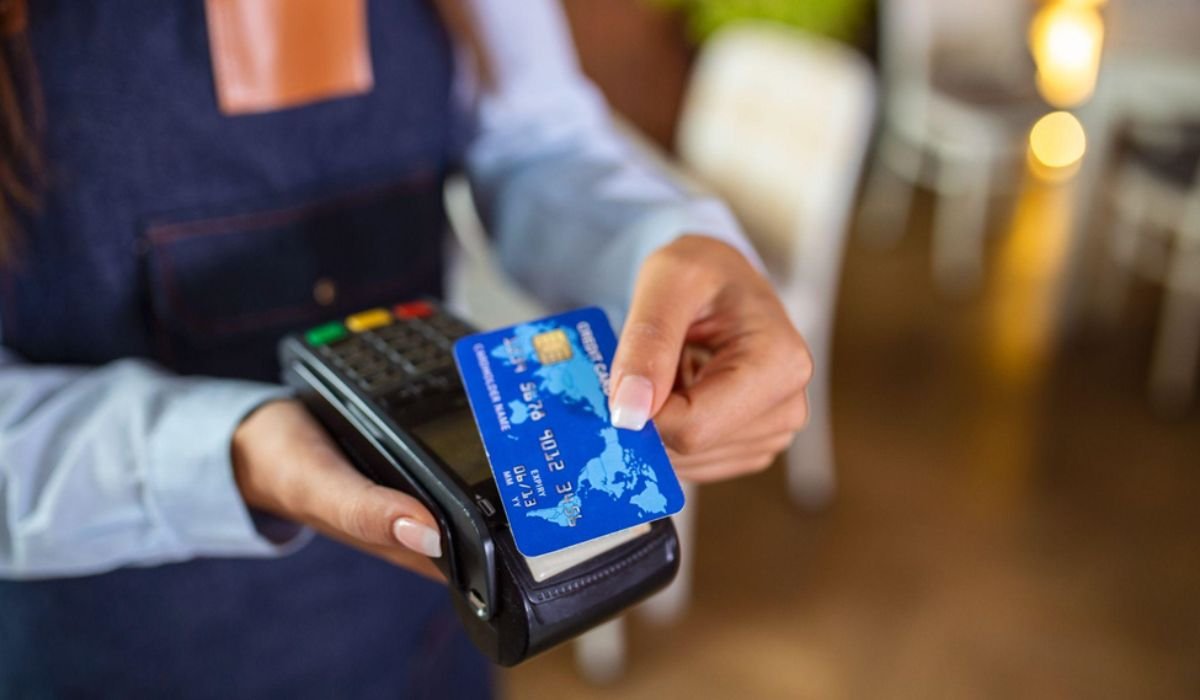
Museums have long been institutions of preservation and education, but their payment infrastructure has often lagged behind other sectors. That’s changing rapidly as credit card terminals become standard equipment at admission desks, gift shops, and café counters across cultural institutions worldwide. These devices are doing more than simply processing transactions—they’re reshaping how museums manage visitor flow, track revenue, and accommodate international guests who expect seamless digital payment options.
The shift toward electronic payment processing represents a fundamental change in museum operations. Where cash registers once dominated, sophisticated terminals now handle everything from contactless payments to mobile wallets, creating faster checkout experiences and more accurate financial records. For institutions managing thousands of daily visitors during peak seasons, this technological upgrade has become essential rather than optional.
How Credit Card Terminals Function
At their core, credit card terminals serve as the bridge between a customer’s payment card and the financial networks that authorize transactions. When a visitor swipes, inserts, or taps their card, the terminal captures encrypted card data and transmits it through multiple security layers to verify funds and complete the purchase.
The process unfolds in seconds:
- The terminal reads card information through magnetic stripe, chip, or near-field communication technology
- Encrypted data travels to the payment processor, which routes the authorization request to the card-issuing bank
- The bank verifies available funds and sends approval or denial back through the network
- Upon approval, funds are earmarked for transfer to the merchant account, typically settling within one to two business days
Modern terminals have evolved considerably from the manual imprint machines that once dominated retail.
Terminal Types and Their Museum Applications
Museums face unique spatial and operational challenges that influence which terminal types work best for their environments. A natural history museum with sprawling galleries has different needs than a compact contemporary art space, and terminal selection should reflect those distinctions.
- Mobile terminals excel in flexibility, allowing staff to process payments anywhere within the facility. These battery-powered devices connect via cellular or Wi-Fi networks, making them ideal for special exhibitions, outdoor sculpture gardens, or temporary event spaces. The trade-off comes with connectivity dependence—signal dead zones can interrupt service.
- Countertop terminals remain the workhorses of fixed-location transactions. Positioned at admission desks and retail counters, these hardwired devices offer reliable processing speeds and typically integrate with existing point-of-sale systems. Their stationary nature limits flexibility but provides consistent performance during high-volume periods.
- Wireless terminals split the difference, combining portability with dedicated connectivity that doesn’t rely on shared Wi-Fi networks. Museums with multiple floors or buildings often deploy these units to maintain payment capabilities across dispersed locations without the connectivity concerns that plague purely mobile solutions.
The choice between terminal types should account for visitor traffic patterns, facility layout, and the frequency of special events requiring temporary payment stations. Many institutions deploy a mixed approach, using countertop terminals for primary transaction points while keeping mobile units available for flexibility.
Operational Advantages for Cultural Institutions
The benefits of implementing modern credit card terminals extend well beyond simply accepting plastic instead of paper currency. These systems create measurable improvements across multiple operational dimensions that directly impact both visitor satisfaction and administrative efficiency.
Transaction speed represents the most immediately visible advantage. Electronic payments process in seconds compared to the time required for cash handling, change-making, and manual receipt writing. During peak visiting hours, this speed differential compounds—a terminal that shaves fifteen seconds off each transaction can reduce queue times by several minutes when processing dozens of consecutive visitors.
Payment flexibility addresses a critical visitor expectation. International tourists, who represent significant revenue for major museums, increasingly travel without substantial local currency. Terminals that accept chip cards, contactless payments, and mobile wallets like Apple Pay accommodate diverse payment preferences without requiring staff to navigate currency exchange complications.
Financial record-keeping improves dramatically with electronic processing. Each transaction generates a digital record that feeds directly into accounting systems, eliminating manual entry errors and providing real-time revenue visibility. This data granularity enables more sophisticated analysis of visitor spending patterns, popular exhibition periods, and gift shop inventory performance.
Suppliers offering credit card terminals with contactless payment and mobile wallet support for institutional settings include DCCSupply, Square, and options through CDW. Verifying that terminals accept international chip cards and diverse mobile wallet platforms—Apple Pay, Google Pay, and regional options—ensures your institution accommodates the international visitor payment preferences this article emphasizes.
Security Architecture in Payment Processing
Payment security has evolved into a complex discipline as fraud techniques have grown more sophisticated. Modern credit card terminals incorporate multiple defensive layers designed to protect cardholder data throughout the transaction lifecycle.
Encryption forms the foundation of secure processing. From the moment a card interfaces with the terminal, sensitive data undergoes encryption that renders it unreadable to anyone intercepting the transmission. End-to-end encryption maintains this protection until the data reaches the payment processor’s secure environment, eliminating vulnerable points where information might be captured.
Tokenization adds another security dimension by replacing actual card numbers with randomly generated tokens that have no value outside the specific transaction context. Even if a token were somehow intercepted, it couldn’t be used to make unauthorized purchases or reveal the underlying card details.
EMV chip technology—named for developers Europay, Mastercard, and Visa—creates unique transaction codes for each purchase. Unlike magnetic stripe data, which remains static and can be copied, chip-generated codes become useless after a single use. This dynamic authentication has significantly reduced counterfeit card fraud in regions where chip adoption is widespread.
Compliance with Payment Card Industry Data Security Standards (PCI DSS) isn’t optional for organizations processing card payments. These requirements, detailed in resources from the PCI Security Standards Council, establish baseline security practices that terminals and their operating environments must maintain. Non-compliance can result in substantial fines and increased liability for fraudulent transactions.
Emerging Technologies Reshaping Payment Processing
The payment terminal landscape continues evolving as new technologies mature and consumer preferences shift. Museums implementing systems today should consider not just current capabilities but also how terminals will adapt to emerging payment methods.
Contactless payment adoption has accelerated dramatically, driven partly by hygiene concerns but sustained by convenience. Near-field communication technology allows customers to complete purchases by simply tapping a card or smartphone against the terminal, eliminating the need to insert cards or handle shared PIN pads.
Mobile device integration has transformed smartphones into payment acceptance tools. Museums can equip staff with tablet-based point-of-sale systems that combine terminal functionality with inventory management, membership lookup, and digital receipt delivery. This consolidation reduces hardware costs while providing richer transaction data.
Artificial intelligence applications in payment processing focus primarily on fraud detection and transaction pattern analysis. Machine learning algorithms can identify suspicious transaction sequences that might indicate compromised cards or fraudulent activity, flagging them for review before funds are transferred. These systems grow more accurate over time as they process more transaction data.
Cloud-based terminal management enables centralized oversight of distributed payment systems. Rather than configuring each terminal individually, administrators can push updates, adjust settings, and monitor performance across all devices from a single interface. This centralization becomes particularly valuable for museum systems with multiple locations or extensive terminal deployments.
Implementation Considerations
Successfully deploying credit card terminals involves more than simply plugging in new hardware. Museums should approach implementation as a process that encompasses staff training, system testing, and contingency planning.
Staff training ensures employees understand not just how to process transactions but also how to handle common issues like declined cards, receipt printer jams, or connectivity problems. Training should cover security practices, including how to identify and respond to potential fraud attempts or suspicious transaction requests.
Testing phases allow institutions to identify problems before they affect visitors. Running parallel systems during a transition period—maintaining old payment methods while introducing new terminals—provides fallback options if technical issues emerge. This redundancy proves particularly valuable during high-traffic periods when payment system failures would significantly impact operations.
Connectivity infrastructure requires evaluation before terminal deployment. Wireless terminals need reliable Wi-Fi coverage or cellular signals throughout areas where they’ll be used. Hardwired terminals require network connections that can handle payment data securely without interfering with other museum systems.
Backup procedures protect against system failures. Even reliable terminals occasionally malfunction, and internet connectivity can be disrupted. Museums should maintain manual payment processing capabilities—whether through backup terminals, mobile card readers, or traditional cash handling—to ensure they can continue operating during technical difficulties.
The Broader Impact on Museum Operations
Modern credit card terminals represent more than a payment processing upgrade—they’re part of a larger digital transformation affecting how museums operate and engage with visitors. The data these systems generate provides insights that extend well beyond financial tracking.
Transaction timing data reveals visitor flow patterns throughout the day and across seasons, informing staffing decisions and exhibition scheduling. Purchase category analysis shows which gift shop items resonate with different visitor segments, guiding inventory decisions and vendor relationships. Membership transaction tracking helps identify renewal patterns and opportunities for targeted retention campaigns.
The shift toward electronic payments also aligns with broader visitor expectations shaped by experiences in retail, hospitality, and entertainment sectors. Museums that maintain modern payment infrastructure signal operational sophistication that extends to other aspects of the visitor experience. Conversely, institutions that lag in payment technology risk appearing outdated in ways that affect overall perception.
As payment technology continues evolving, museums that establish robust terminal infrastructure position themselves to adopt emerging capabilities without requiring complete system overhauls. The terminals deployed today should be viewed as platforms capable of supporting payment methods that haven’t yet achieved mainstream adoption, from cryptocurrency transactions to biometric authentication systems that may become commonplace in coming years.
For cultural institutions navigating these decisions, the goal isn’t simply to accept credit cards—it’s to create payment experiences that feel seamless and contemporary while supporting the operational efficiency that allows museums to focus resources on their core educational and preservation missions.
 Mohammed Saleem