
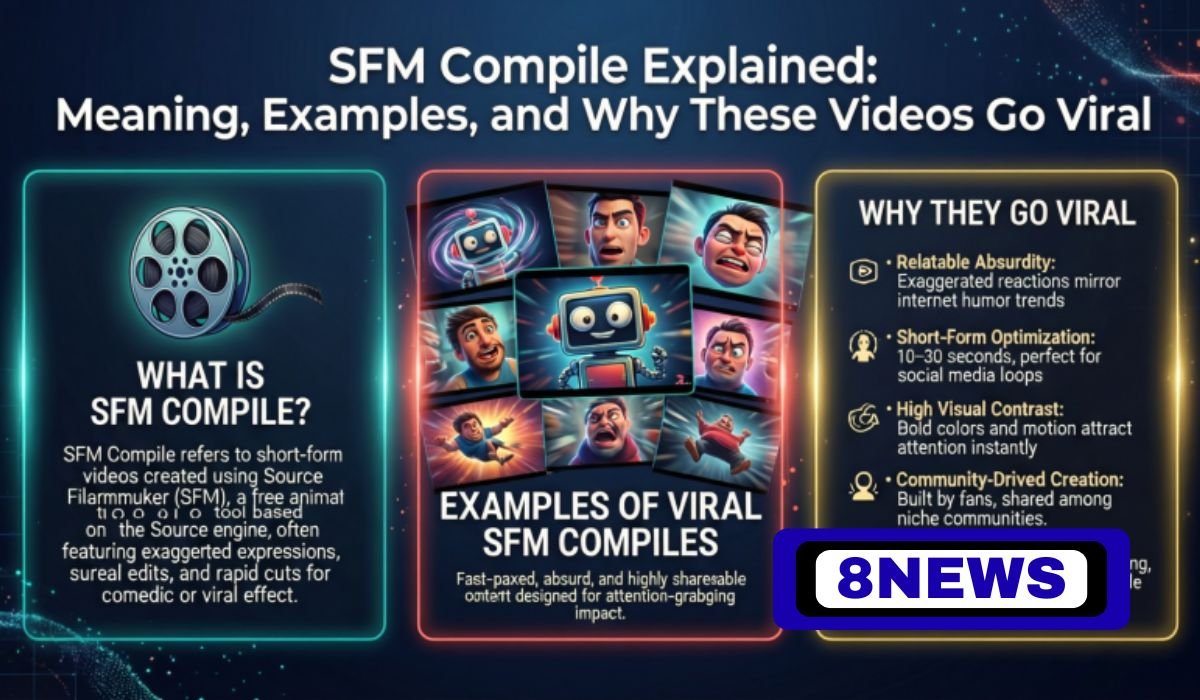
If you’ve spent any time in the world of game animations, memes, or cinematic fan videos, you’ve probably heard the phrase SFM Compile being thrown around. But what exactly does it mean? Why are so many creators talking about it, and how do videos made with it end up going viral across platforms like YouTube, TikTok, and Reddit?
SFM Compile refers to a vital process used in Source Filmmaker (SFM), a powerful animation tool developed by Valve. This process transforms raw assets—like models, maps, textures, and animations—into optimized files that SFM can understand. But beyond the technical definition, SFM Compile has also become a cultural reference point in online communities, associated with hilariously exaggerated animations, meme-ready expressions, and community-driven creativity. This article explores everything you need to know about SFM Compile—from its purpose and inner workings to real examples and the viral nature of the content it helps create.
Let’s dive into the fascinating world of SFM Compile, where game modding meets animation artistry and where the internet’s next viral hit could be just one compile away.
Quick Bio Information
Tool Name: SFM Compile
Used With: Source Filmmaker (SFM)
Primary Function: Converts raw assets into Source Engine formats
Common File Outputs: .mdl, .vtf, .vmt, .ani, .bsp
Key Tools Used: Crowbar, StudioMDL, VTFEdit, Hammer Editor
Requires QC File: Yes, for model compilation
Common Uses: Meme videos, fan animations, cinematic trailers
Supported Assets: Models, textures, maps, animations
Popularity Reason: Viral meme potential and Source Engine flexibility
Community Support: Reddit, Steam Workshop, SFM Discord servers
What Does SFM Compile Actually Mean?
At its core, SFM Compile refers to the act of converting raw 3D files into Source Engine–friendly formats so they can be used inside Source Filmmaker. These raw files might include SMD or FBX (for models), TGA (for textures), or VMF (for maps). But SFM doesn’t support these directly—it needs compiled versions, such as .mdl for models, .vtf and .vmt for textures, .ani for animations, and .bsp for maps.
The term “compile” simply means to transform raw data into usable, optimized content. Just like a computer program must be compiled before it runs, so too must assets be compiled before SFM can animate them. This process ensures that models appear correctly, textures load without glitches, animations flow smoothly, and maps render accurately.
So when a creator says, “I need to compile this for SFM,” they’re preparing their assets to be read and manipulated by the Source Filmmaker engine.
How SFM Compile Works
To compile successfully, creators typically use tools like Crowbar, StudioMDL, or GUI-based software designed to streamline the workflow. Here’s how it all fits together:
First, the creator organizes their assets—models, textures, skeleton rigs, and animations—into a structured folder system. Then they write a QC file (short for QuakeC), which acts like a blueprint for the compile. This file tells the compiler where the models are, how they should behave, and what textures they should use.
Using a compile tool, the QC file is executed, and the raw SMD or FBX files are converted into .mdl files. These files are then placed in directories that SFM can read. When the animator opens Source Filmmaker, the compiled asset appears ready to use on the timeline.
It sounds complex, but for seasoned creators, this becomes second nature. Tools like Crowbar make it easier by handling many of the steps automatically.
Why SFM Compile Matters In Animation
Source Filmmaker can’t function without compiled assets. Whether it’s a custom character, a stylized environment, or a new animation cycle, everything must be prepped in advance through compiling.
This matters because improperly compiled assets can cause serious issues:
A model may refuse to load.
Textures may appear purple or missing entirely.
Rigs may break, causing limbs to distort.
Animations might stutter, freeze, or crash SFM.
By using SFM Compile properly, animators gain full control over their assets. They can bring in unique characters, modify lighting, retarget animations, and build complex scenes that rival professional cinematic work. This control is one reason why SFM is still widely used despite being based on the aging Source Engine.
Real Examples Of SFM Compile Videos
SFM Compile isn’t just about technical accuracy—it’s the foundation for many of the internet’s funniest and most creative game animations. Here are a few popular video categories that rely on successful compiling:
Team Fortress 2 Memes: Wacky dance cycles, slow-motion fails, and characters making absurd faces.
Half-Life 2 Remakes: Re-imagined scenes with enhanced lighting and expressions.
Cross-Game Edits: Compiling characters from other games (like Overwatch or Sonic) into SFM for crossover content.
Fandom Animations: Emotional or comedic storytelling using game assets.
Custom Character Showcases: Demonstrations of newly created or modded 3D models, compiled and animated in SFM.
These videos attract millions of views because they blend nostalgia, humor, and artistry—often all thanks to precise compiling.
Why SFM Compile Videos Go Viral
There’s something uniquely viral about SFM Compile videos. Part of it is the nostalgia factor. Gamers instantly recognize the iconic faces of TF2 characters or G-Man from Half-Life. Another factor is the expressiveness of Source Filmmaker’s models—when exaggerated, they become perfect for meme humor and surreal animations.
SFM also allows creators to produce unexpected or absurd crossovers, such as Shrek appearing in a Counter-Strike map or Gordon Freeman dancing to pop music. These surprise elements, combined with the surreal visual style, help videos take off on TikTok, Twitter, and Reddit.
Additionally, the effort that goes into custom compiles—unique lighting, original animations, or voiceovers—can make a video stand out as high-effort, which audiences reward with shares and likes.
Tools Used In The SFM Compile Process
While “SFM Compile” is often used as a general term, there are several tools that help get the job done. Each plays a specific role:
Crowbar is one of the most popular front-end tools used to compile and decompile Source Engine models. It offers a clean interface and automates many steps.
StudioMDL is Valve’s original command-line compiler, part of the Source SDK. It’s used for direct compilation via scripts.
VTFEdit helps convert standard image files into .vtf textures, which SFM can apply to models.
Hammer Editor is used to build and compile maps into .bsp format. These are then imported into SFM as environments.
Notepad++ is frequently used to edit QC files, thanks to its syntax highlighting and text formatting features.
By learning these tools, creators can customize every part of their animation workflow.
Common Issues And How To Fix Them
SFM Compile can be frustrating when things go wrong. Here are some of the most common issues creators face:
Missing textures usually happen when .vtf or .vmt files are placed in the wrong directory or linked incorrectly in the QC script. To fix this, double-check texture paths and naming conventions.
Rigging errors or model breakage typically come from incorrect bone names or improperly exported SMD/FBX files. Re-exporting the model from a 3D tool like Blender with clean weights often resolves this.
Failed compiles are usually due to a missing or broken line in the QC file. Reading the compile log carefully will usually point to the problem.
Asset crashes in SFM often come from high-poly models or unsupported materials. Optimization is key—reduce polygon counts and simplify shaders.
How Compilation Affects Final Animation Quality
You might think of compiling as a back-end task, but it actually affects what your audience sees. A well-compiled asset loads quickly, moves naturally, and supports lighting and shadows effectively. Compiling with proper smoothing groups and rigging makes animations appear more lifelike. Properly compressed textures look crisp without bloating memory usage.
In contrast, skipping steps or compiling with errors can lead to jarring animations, lighting glitches, or outright crashes during rendering. This is why professional-level SFM animators spend as much time perfecting their compile process as they do animating.
Best Practices For Creating SFM Compile Videos
If you’re aiming to make a viral or high-quality SFM video, here are a few habits that experienced animators follow:
Always organize your asset folders carefully before compiling. Clean file structure reduces errors. Use naming conventions to avoid confusion.
Start with small compile tests before committing to large projects. Testing early lets you fix issues before they snowball.
Check all rigging and material paths in your QC file. Don’t rely on guesswork—verify every line.
When creating meme-style videos, lean into exaggeration—big expressions, over-the-top motions, and comedic timing all thrive in SFM.
Share your work in active communities like the SFM subreddit or Steam Workshop. Feedback is fast and often constructive.
The Future Of SFM Compile And Animation Trends
Even in 2025, Source Filmmaker remains a go-to tool for creators around the world. Despite its age, it continues to power viral content because of its flexibility, community support, and comedic potential. New tools like Blender and Source 2 Filmmaker are growing in popularity, but many creators still return to SFM for its simplicity and iconic feel.
As more modding communities build tools to speed up compiling, and as creators develop templates and share scripts, expect to see even more ambitious SFM Compile videos. From detailed remakes of classic game scenes to unexpected mashups, the format isn’t slowing down—it’s evolving.
Final Thoughts
SFM Compile may sound like a technical term, but it represents something much bigger: the intersection of creativity, gaming culture, and digital storytelling. Whether you’re an animator building cinematic trailers or a hobbyist making TF2 memes for TikTok, mastering the art of compiling is essential to success in Source Filmmaker.
At the heart of every viral SFM video is a carefully compiled set of models, textures, and animations that all came together just right. By understanding how the process works—and why it matters—you can unlock your full creative potential and join the vibrant, ever-growing community of SFM artists.
FAQs About SFM Compile
What Is SFM Compile?
SFM Compile is the process of converting raw 3D files like models and animations into usable formats for Source Filmmaker. It ensures that custom content can be loaded and used in animations.
Why Do SFM Compile Videos Go Viral?
SFM videos often go viral because of their humor, expressiveness, and nostalgic value. The exaggerated animations and meme-ready style make them perfect for platforms like TikTok and YouTube.
Is SFM Compile Difficult To Learn?
It can be tricky for beginners, but with tools like Crowbar and tutorials available online, most creators can learn it step-by-step. Practice and testing make it easier over time.
What Tools Are Needed For SFM Compile?
The most common tools include Crowbar for model compiling, StudioMDL for command-line control, VTFEdit for textures, and Hammer for map building.
What Is A QC File In SFM Compile?
A QC file is a script that tells the compiler how to build the model, including paths, animations, materials, and hitboxes. It’s essential to the compile process.
Can I Use Blender Or Maya With SFM Compile?
Yes. You can create models and animations in Blender or Maya and export them in compatible formats like SMD or FBX before compiling for SFM.
Where Can I Share Or Download SFM Compile Assets?
Popular platforms include the Steam Workshop, Reddit’s r/SFM, and community forums. Many creators also share models via GitHub or personal modding sites.
People Also Read: What Is Jhonbaby777? A Simple Guide To The Username People Are Searching
 Mohammed Saleem